
On April 25, an intimate group from the Art Deco Society of New York journeyed to New York’s Upper East Side for a private viewing of the Hildreth Meière mosaics at the Temple Emanu-El (1929). The tour was part of Springtime in New York: Art Deco Weekend 2026, and the vibrant interiors drew an appreciative response from the group as they entered the soaring six-story-high sanctuary, its breathtaking sanctuary, rich symbolism, and welcoming spirit.
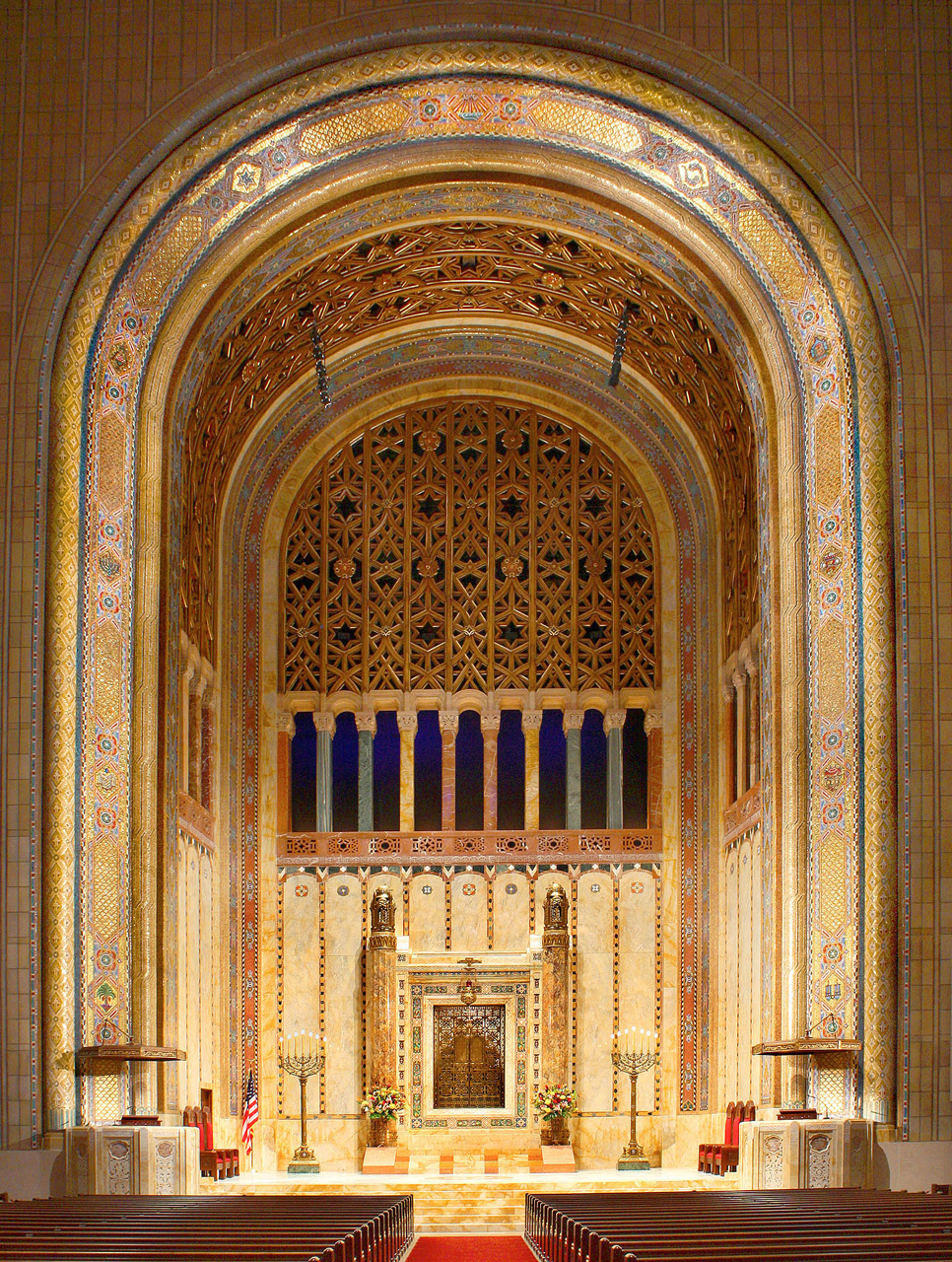
Six-story-high arch in main sanctuary with Ark on eastern wall
Photo courtesy of the International Hildreth Meière Association
Temple Administrator Emeritus, Mark Heutlinger set the stage by explaining the history of the congregation and its synagogue, the largest in the world. He concluded by drawing attention to Hildreth Meière’s six-story mosaic arch over the bimah that blends Jewish imagery with early Art Deco style. As her 1929 commission at the temple was simultaneous with a commission at nearby St. Bartholomew’s Church on Park Avenue, Meière mentioned in correspondence the challenge of avoiding any crosses as a geometric pattern in her design work.
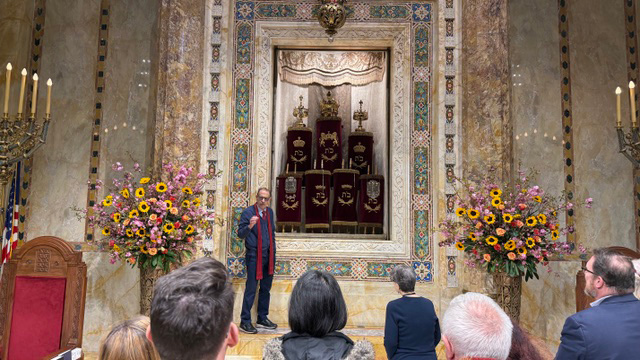
Mark Heutlinger in front of the Ark
Photo courtesy of Ginny Poleman
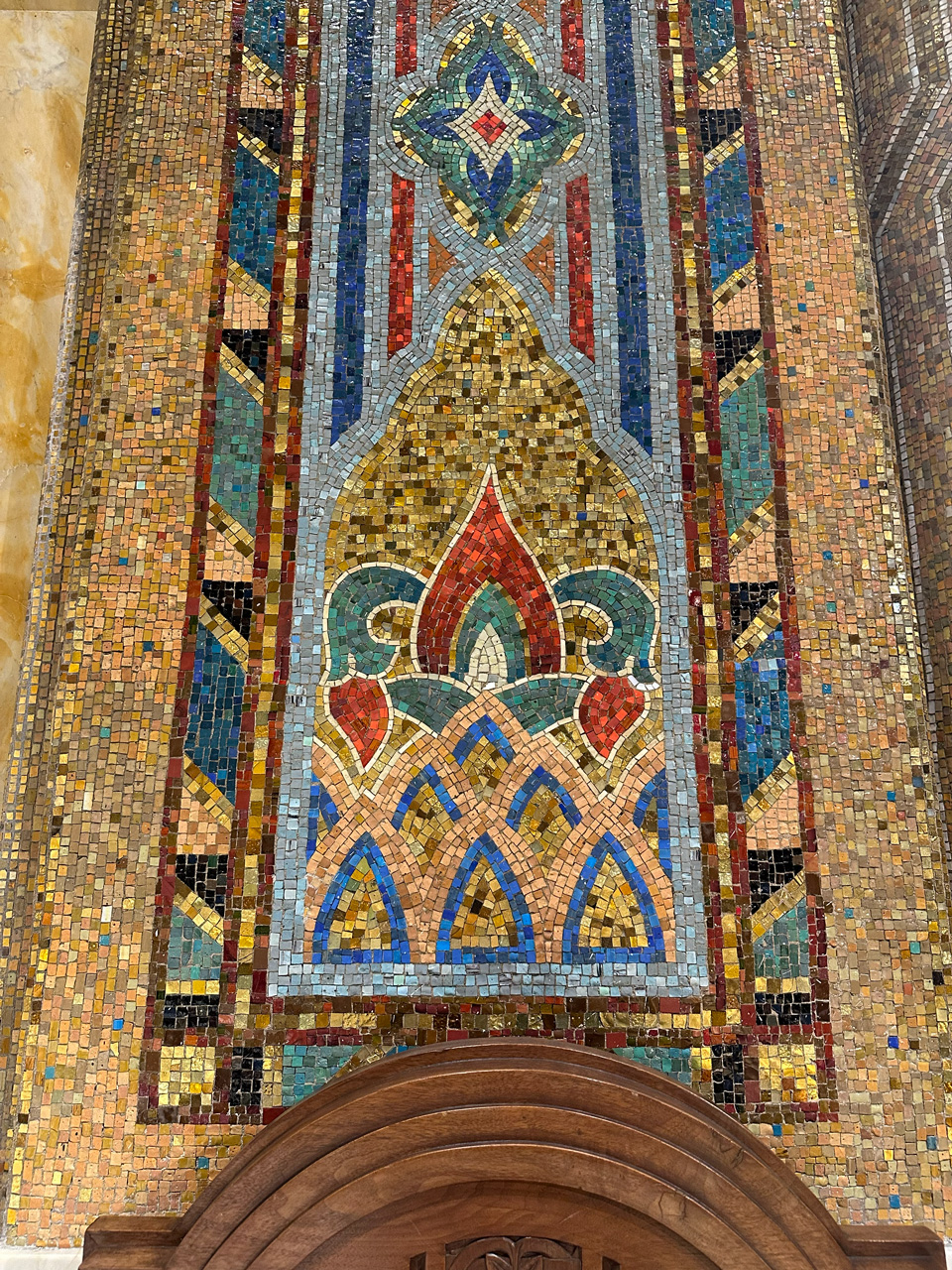
Tulip pattern, flamelike shape
Photo courtesy of Courtesy of the International Hildreth Meière Association
Hildreth Meière’s great-grand niece, Nancy Bachana, was on hand to tell the story of Meière’s early education, her inspirations, her business acumen, and her nearly one-hundred other commissions across the United States.
Ginny Poleman, tour guide for the International Hildreth Meière Association (IHMA), answered educated audience questions specific to the arch, pointing out the unique, visual interplay of Eastern, Western, and Judaic symbols in the bands of glass mosaic patterns, particularly the black-and-white chevron borders inspired by Sioux quillwork and beadwork. The remarkable bands of bold-colored, glass tiles edging the Arch, explained Poleman, contain a complex design of lozenge and tulip patterns inspired by the East, and Art Deco flamelike shapes, all framing a series of eleven Judaic symbols including images of the Tree of Life, a prayer shawl, and an Open Torah Ark. Meière chose an uncomplicated and graphic design at a scale that could be recognized by the congregants sitting in the pews nearly 100-feet away.
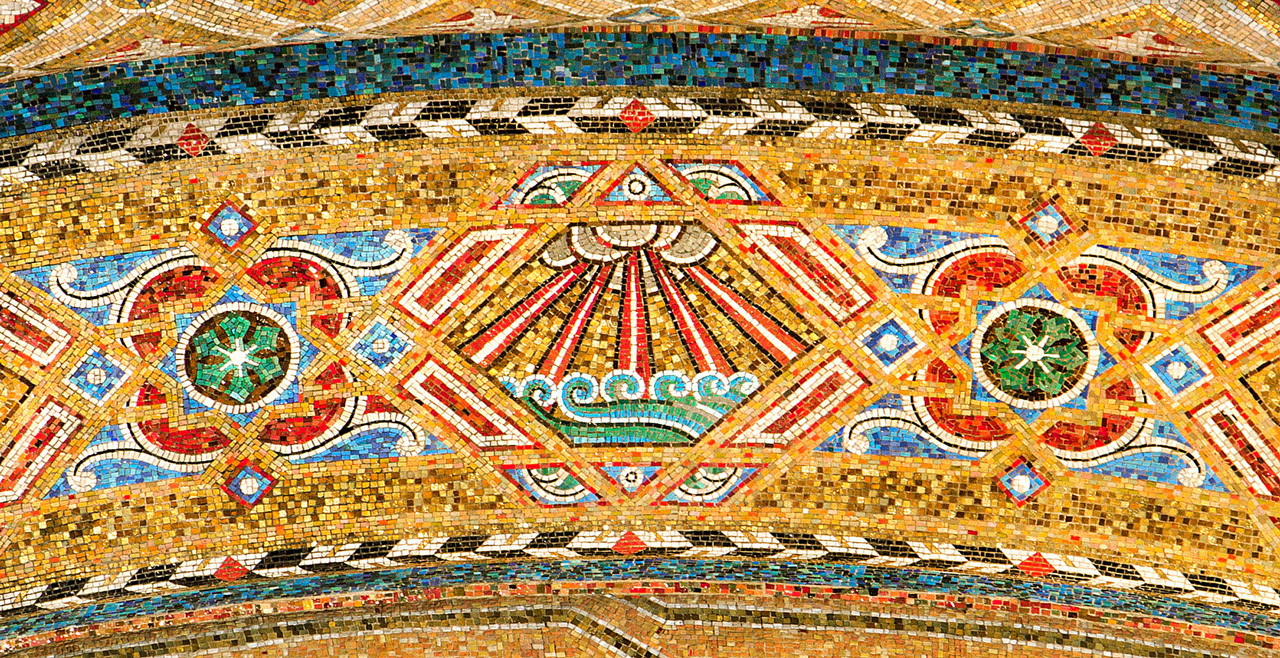
Day two of Creation with black-and-white chevron borders
Photo courtesy of the International Hildreth Meière Association
After Nancy and Ginny answered further questions, the group continued on to the next stop in their exploration of New York City’s celebrated Art Deco interiors and landmarks.
About the International Hildreth Meière Association
Founded in 2004, the International Hildreth Meière Association (IHMA) inspires, educates, and preserves the legacy and works of artist Hildreth Meière. As the primary source for information on Meière’s life and art, IHMA has created exhibitions, publications, documentaries, tours, and lectures for the general public, educators, and the stewards of Hildreth’s commissions.
Explore more: hildrethmeiere.org
Follow along on Instagram: @hildrethmeiere
Join us on Facebook: International Hildreth Meière Association
Connect on LinkedIn: International Hildreth Meière Association
Press/collaboration inquiries: info@hildrethmeiere.org